
Ankle Arthroscopy
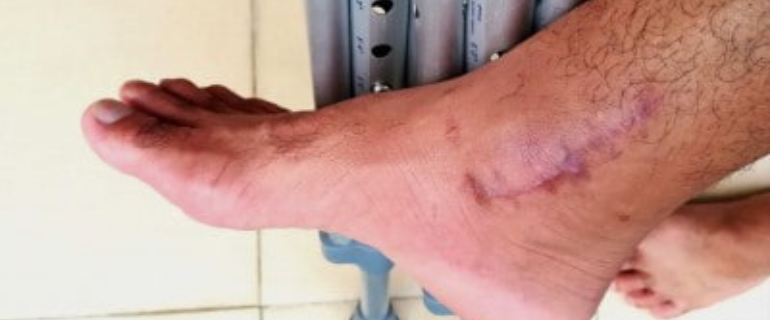
Ankle pain, stiffness, or instability can make walking, exercising, or standing difficult. Dr. Rohit Lal, a leading Arthroscopy Surgeon in Ranchi, offers advanced Ankle Arthroscopy—a minimally invasive procedure that diagnoses and treats various ankle joint issues with precision.
Using small incisions and a fiber-optic camera (arthroscope), this technique provides targeted treatment with minimal pain, reduced scarring, and quicker recovery compared to traditional surgery. As a skilled Arthroscopy Surgeon in Ranchi, Dr. Lal ensures effective care for injuries, overuse conditions, or chronic inflammation—restoring joint function and preventing future complications.
Advanced Ankle Arthroscopy by Expert Arthroscopy Surgeon in Ranchi – Dr. Rohit Lal
Ankle pain, stiffness, or instability can seriously impact your ability to walk, exercise, or even stand comfortably. Dr. Rohit Lal offers advanced Ankle Arthroscopy, a minimally invasive procedure designed to diagnose and treat a wide range of ankle joint conditions with precision.
Using tiny incisions and a fiber-optic camera (arthroscope), this technique enables accurate treatment with less pain, minimal scarring, and faster recovery than traditional open surgery. Dr. Lal’s expertise ensures patients receive focused, high-quality care that restores ankle function and helps prevent future problems.
Whether your ankle issues are due to injury, overuse, or chronic inflammation, this modern procedure allows for effective treatment without prolonged downtime—helping you get back on your feet quickly and safely.
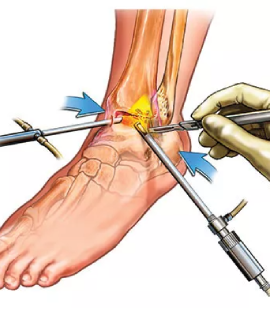
What Is Ankle Arthroscopy?
Ankle arthroscopy is a keyhole surgery that allows orthopedic specialists to view the inside of the ankle joint and treat conditions such as loose bone fragments, ligament damage, impingement, and cartilage wear. Dr. Rohit Lal uses this technique to both diagnose hidden joint issues and carry out delicate procedures with high precision.
Conditions Treated with Ankle Arthroscopy:
- Ankle impingement (pain caused by pinching of soft tissue)
- Loose bone or cartilage fragments
- Ligament injuries and instability
- Osteochondral lesions (cartilage damage)
- Synovitis (inflammation of the joint lining)
- Scar tissue removal
- Early-stage arthritis management
Recovery & Rehabilitation
Since ankle arthroscopy involves minimal tissue disruption, most patients experience a quicker return to mobility. Dr. Lal provides a structured rehabilitation plan that includes physiotherapy, guided exercises, and follow-ups to ensure complete healing. With proper care, patients typically resume normal activities within a few weeks.